A Beginner’s Guide to Reading Pet Food Labels—and Why It Matters More Than You Think
You love your dog. You make sure they have a cozy bed, regular vet visits, plenty of exercise, and lots of snuggles. But here’s a question worth sitting with: do you know what’s actually in the food you put in their bowl every single day?
If the answer is “not really,” you’re not alone. Pet food labels are designed to be confusing. Phrases like “premium,” “holistic,” and “natural” sound reassuring—but they’re not regulated. They can mean absolutely nothing.
Here’s the truth: what your dog eats every day is one of the most powerful factors in how long they live and how good they feel. And the gap between what’s marketed and what’s actually in many commercial dog foods? It’s wider than most pet parents realize.
This month, I want to help you close that gap. Not to scare you—but to empower you. Because once you know what to look for, choosing better food for your dog becomes a lot less overwhelming.
The Pet Food Industry Isn’t What You Think
Here’s something most people don’t know: the majority of commercial pet food is made with “feed-grade” ingredients—not the same quality standards as food made for human consumption. In fact, ingredients that would never make it to your grocery store can be perfectly legal in your dog’s food.
We’re talking about what the industry calls “4-D meats”—meat sourced from animals that were dead, diseased, dying, or disabled before processing. We’re talking about chemical preservatives like BHA, BHT, and ethoxyquin that are banned or restricted in human food in many countries. We’re talking about artificial dyes that serve no nutritional purpose whatsoever—they’re there to make the food look appealing to you, not your dog.
Holistic veterinarian and New York Times bestselling author Dr. Karen Becker has spent her career sounding the alarm on exactly this. Her core belief—backed by years of research—is that biologically appropriate real food and a dog’s immediate environment are the most important factors in determining health, vitality, and lifespan. Her books The Forever Dog and The Forever Dog Life bring the science of canine longevity to everyday pet parents in a way that’s practical and empowering. If you haven’t discovered her work yet, she’s well worth exploring.
None of this is hidden. It’s right there on the ingredient panel, if you know how to read it.
How to Actually Read a Pet Food Label
The ingredient panel is your most powerful tool. Here’s what you need to know:
Ingredients Are Listed by Weight
The first five to seven ingredients make up the bulk of what’s in the food. If the first ingredient is “corn” or “meat by-products,” that tells you something important about the quality.
Look for Named Protein Sources
“Chicken,” “beef,” “salmon”—these are what you want to see first. “Meat” or “poultry” without a specific animal? That’s a red flag. It means the protein source is unidentified and inconsistent. “Chicken meal” or “salmon meal” from a named source can actually be a good thing—it’s concentrated protein with the moisture removed—but only if the source is clearly named.
Watch Out for These Ingredients
BHA, BHT, and ethoxyquin are chemical preservatives linked to liver damage and cancer. Corn syrup has no place in dog food. Propylene glycol—yes, the same chemical base as antifreeze—is still permitted in dog food, though it’s been banned in cat food. Carrageenan, a common thickener in wet food, has been linked to intestinal inflammation.
If you spot these on your dog’s food label, it’s worth exploring alternatives.
Marketing Claims to Question
“Natural” has no legal definition in pet food. “Premium” and “gourmet” are completely unregulated. “Holistic” doesn’t guarantee a single thing about ingredient quality. Even “human-grade” can be misleading unless every ingredient and every part of the processing meets USDA standards for human consumption—most brands making that claim don’t qualify.
The phrase that actually does matter? “Named protein sources” in the first few ingredients. That’s where the real story lives.
What Good Dog Food Actually Looks Like
Quality dog food isn’t mysterious. A high-quality ingredient panel looks something like this: Chicken, chicken meal, sweet potatoes, peas, chicken fat (preserved with mixed tocopherols), salmon oil, blueberries, cranberries, chicory root, probiotics.
Notice what’s there: a specific protein source listed first, whole food carbohydrates, named fat sources, natural preservatives, and beneficial additions like probiotics and omega-3s. Notice what’s not there: by-products from unnamed sources, chemical preservatives, artificial colors.
You don’t have to be able to pronounce every ingredient. But if the first few ingredients are recognizable whole foods, that’s a really good sign.
You Don’t Have to Overhaul Everything at Once
I want to be clear about something: improving your dog’s nutrition doesn’t have to be expensive or overwhelming. You don’t have to throw out what you have and start over.
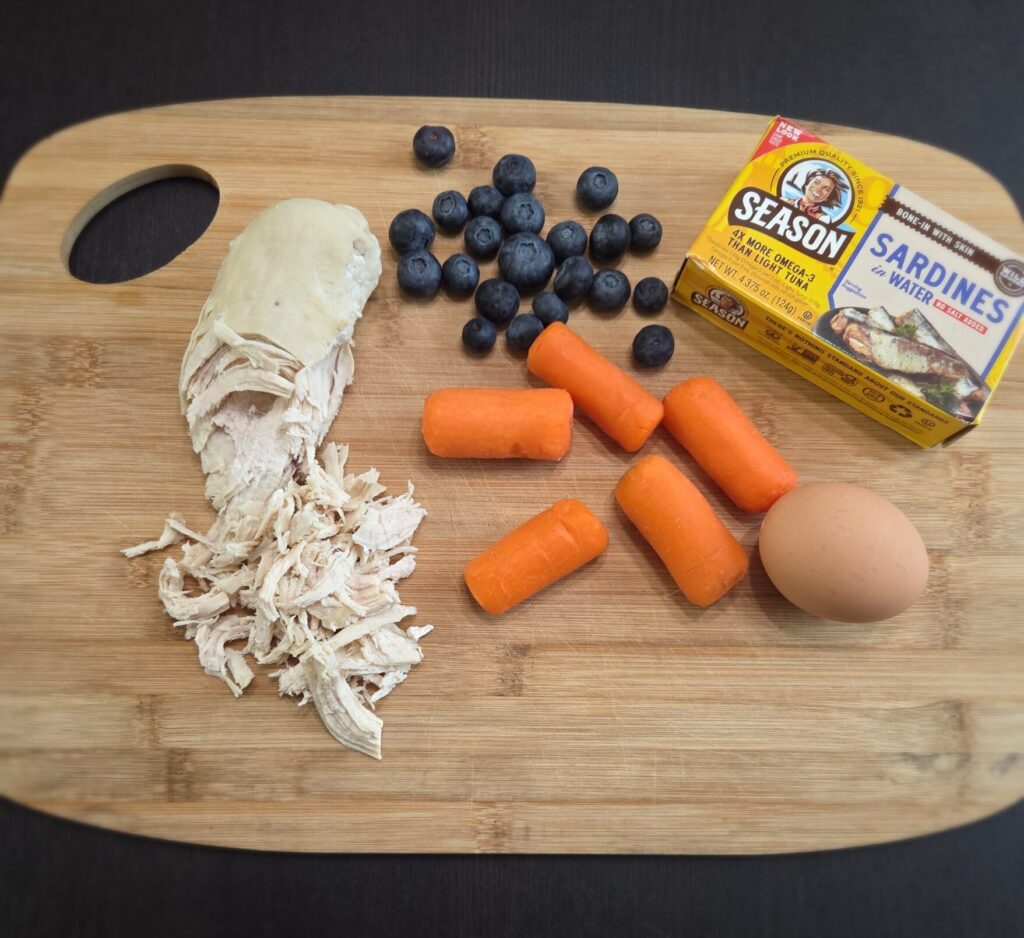
Even small changes make a meaningful difference. Adding a spoonful of plain cooked chicken to a bowl of kibble increases its nutritional value. A drizzle of salmon oil supports skin health, coat quality, and joint function. Plain Greek yogurt (make sure it has no xylitol—that’s toxic to dogs) adds probiotics and digestive support. Cooked sweet potato or green beans are easy, affordable additions that most dogs love.
If you want to switch to a higher-quality food, do it gradually over seven to ten days—mixing old and new food slowly—to avoid digestive upset. Start with 75% old food and 25% new, and shift the ratio every couple of days.
Your Dog Is Counting on You
Dogs can’t read ingredient labels. They can’t advocate for themselves. You are the one making these decisions, and that’s actually a gift—because it means you have real power to support your dog’s health in a tangible, daily way.
One small upgrade. One label read more carefully. One fresh ingredient added to the bowl. These things add up over a lifetime.
This month, I’m sharing a four-week social media series walking through everything you need to know about what’s in your dog’s food—and how to make better choices without breaking the bank. Each week, I’ll break down one piece of the puzzle: reading labels, identifying harmful ingredients, recognizing quality ingredients, and making the switch.
And if you want to go deeper, I’d highly recommend exploring the work of Dr. Karen Becker (drkarenbecker.com), Dr. Judy Morgan (drjudymorgan.com), and Dog Food Advisor (dogfoodadvisor.com). These are some of the most trusted voices in holistic pet nutrition, and they’ve shaped much of what I share with you here.
Connie Klar is an Elite Fear Free Certified Professional and animal communicator at Dynamic Animal Communication in Indianapolis, Indiana. She helps pet parents connect more deeply with their animals and support their wellbeing through communication, energy healing, and education.
www.dynamicanimalcommunication.com · connie@dynamicanimalcommunication.com